
HPEIn development

HPE to launch AI straight to the Moon
Source: Autobound Signal API · 113 signals tracked for HPE · updated

Get HPE's live signals in Claude or ChatGPT, or by API

AskWhat changed at HPE this week? Use Autobound signals for hpe.com.

What happened

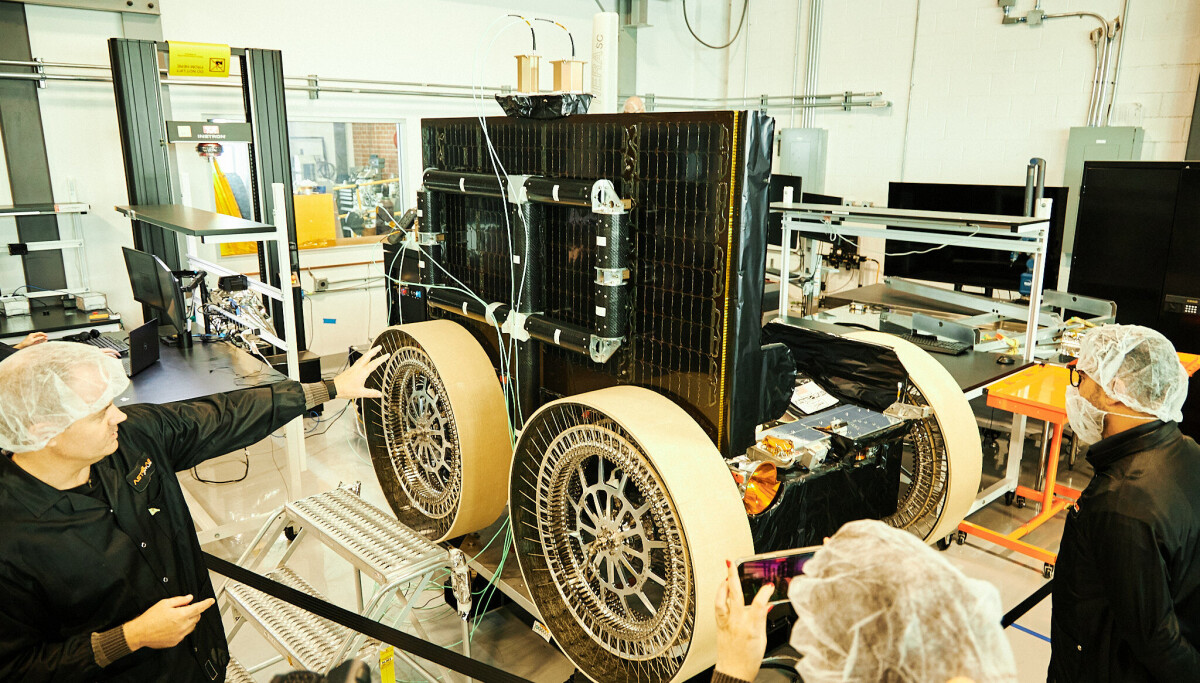
Hewlett Packard Enterprise is preparing to send its fourth-generation Spaceborne Computer to the Moon aboard Astrolab's FLIP rover before the end of the year.

Source

theregister.comOct 20, 2026By Tobias Mann

HPE to launch AI straight to the Moon

Article excerpt

Highlighted: the sentence this signal was extracted from

science Mystery silicon and mirrored SSDs set to touch down before year's end Forget space datacenters. Before the end of the year, Hewlett Packard Enterprise (HPE) will have AI running on the Moon. This isn't some exec's loony fantasy either. HPE has been building orbital compute platforms for the International Space Station (ISS) for years. Now, it's sending its fourth-gen Spaceborne Computer to the Moon aboard Astrolab's Flex Lunar Innovation Platform (FLIP) lunar rover. Part of NASA's Commercial Lunar Payload Services (CLPS) program, the rover is set to be deployed near the Moon's south pole by the Voyager Technologies Griffin-1 lander later this year. Assuming a safe landing on the surface, FLIP will serve as a test bed for a range of emerging technologies including HPE's latest space-faring compute platform. Specifically, Spaceborne Computer 4, which for the sake of brevity we'll just call SBC4, will carry out a number of AI and HPC-centric experiments during the rover's year long mission on the lunar pole. The actual silicon powering SBC4 is still a bit of a mystery. We're told the reason for the secrecy largely comes down to the high-risk nature of the mission. If the hardware fails, HPE's compute partner doesn't want their name tied to it. No guts but for the glory, we suppose, though Kioxia doesn't seem too worried. What we do know is that it is equipped with a...

Keep reading with a free account

The rest of this article, and every signal for HPE, is in your free account.

Extracted by Autobound

From the Signal API record
Event
In development

What this signalsWork in development often leads to new buying for tools, data and services.

Product
Spaceborne Computer 4

The full record

From the Signal API record

Details

Release type
Generation

Topics and mentions

Product tags

  • general technology
  • future tech
  • space

Extraction

Confidence
95%
Detected
Oct 20, 2026
signal_type
news
signal_subtype
is_developing

Use this data

Get every in development signal for HPE and the companies you sell to, in the tools you already use.

  1. Ask Claude about it

    Connect Autobound to Claude, Claude Code or Cursor with MCP. Then ask: “What changed at HPE this week?”

  2. Send it to your own tools

    The Signal API returns in development signals for any list of companies as JSON, for your CRM, warehouse or app.

  3. Try it free

    Sign up and spend your free credits on the companies you sell to.

    Start Free1,000 free credits

The API returns more than this page shows

This page shows a preview. The full news record in the Signal API and MCP can also have these 8 fields. Some fields are empty for some signals.

Company

  • linkedin_urlValue in the API
  • industriesValue in the API
  • employee_count_lowValue in the API
  • employee_count_highValue in the API
  • revenueValue in the API
  • descriptionValue in the API

Signal

  • signal_nameValue in the API
  • associationValue in the API
Show the full JSONThe record on this page and the API request

GET /v1/signals/b9dc4137-df6d-0b30-e21c-cee5ed29d5eb returns this record as JSON. POST /v1/companies/enrich returns every signal for hpe.com.

{
  "signal_id": "b9dc4137-df6d-0b30-e21c-cee5ed29d5eb",
  "signal_type": "news",
  "signal_subtype": "is_developing",
  "detected_at": "2026-10-20T14:00:00+00:00",
  "company": {
    "name": "HPE",
    "domain": "hpe.com"
  },
  "data": {
    "url": "https://www.theregister.com/science/2026/10/20/hpe-to-launch-ai-straight-to-the-moon/5303983",
    "title": "HPE to launch AI straight to the Moon",
    "author": "Tobias Mann",
    "excerpt": "science Mystery silicon and mirrored SSDs set to touch down before year's end Forget space datacenters. Before the end of the year, Hewlett Packard Enterprise (HPE) will have AI running on the Moon. This isn’t some exec’s loony fantasy either. HPE has been building orbital compute platforms for the International Space Station (ISS) for years. Now, it’s sending its fourth-gen Spaceborne Computer to the Moon aboard Astrolab’s Flex Lunar Innovation Platform (FLIP) lunar rover. Part of NASA’s Commercial Lunar Payload Services (CLPS) program, the rover is set to be deployed near the Moon’s south pole by the Voyager Technologies Griffin-1 lander later this year. Assuming a safe landing on the surface, FLIP will serve as a test bed for a range of emerging technologies including HPE’s latest space-faring compute platform. Specifically, Spaceborne Computer 4, which for the sake of brevity we’ll just call SBC4, will carry out a number of AI and HPC-centric experiments during the rover’s year long mission on the lunar pole. The actual silicon powering SBC4 is still a bit of a mystery. We’re told the reason for the secrecy largely comes down to the high-risk nature of the mission. If the hardware fails, HPE’s compute partner doesn’t want their name tied to it. No guts but for the glory, we suppose, though Kioxia doesn't seem too worried. What we do know is that it is equipped with a...",
    "product": "Spaceborne Computer 4",
    "summary": "Hewlett Packard Enterprise is preparing to send its fourth-generation Spaceborne Computer to the Moon aboard Astrolab's FLIP rover before the end of the year.",
    "planning": true,
    "image_url": "https://image.theregister.com/5303988.jpg?imageId=5303988&x=0&y=0&cropw=100&croph=100&panox=0&panoy=0&panow=100&panoh=100&width=1200&height=683",
    "confidence": 0.95,
    "product_data": {
      "name": "Spaceborne Computer 4",
      "full_text": "fourth-gen Spaceborne Computer",
      "fuzzy_match": false,
      "release_type": "generation"
    },
    "product_tags": [
      "general_technology",
      "future_tech",
      "space"
    ],
    "published_at": "2026-10-20T14:00:00Z",
    "article_sentence": "Now, it’s sending its fourth-gen Spaceborne Computer to the Moon aboard Astrolab’s Flex Lunar Innovation Platform (FLIP) lunar rover."
  }
}

Long text fields are shortened on this page.

Looking up one signal by its id is free. Enrich costs 2 credits per signal returned; a call with no results is free.